For families of young athletes

Game day starts long before the first whistle.

I help families of athletes get upstream—putting health & happiness first so they feel strong, fueled, focused, confident, and supported before, during, and after competition—because when they feel their best, performance follows.

Get the Game Day Playbook

8-stage digital playbookPrintable tools240+ page resource

Game days finally stopped feeling like complete chaos.Amanda R., mother of a 13-year-old soccer player

Kelly Brooks Beck, founder of Upstream Livin
Kelly Brooks Beck

Kelly Brooks BeckFormer D1 + Pro Volleyball Athlete, Coach & Sports Mom

  • Division I Big 12Volleyball at Texas Tech
  • Professional AthletePuerto Rico, Germany, Italy
  • 25+ yearsDeveloping athletes
  • Sports momRaising two young athletes
Health first, performance follows

Your athlete does not need another adult yelling, “Try harder!”

The Upstream Livin Game Day Playbook is a complete, step-by-step lifestyle guide: practical biohacking tools, real-life sports-parent advice, conversation examples, meal ideas, checklists, and printables across 8 stages.

Preparing for the week ahead? Dealing with a challenge right now? Trying to start a conversation without your teenager disappearing into their hoodie? Your spidey-senses are telling you something is off with your kiddo's health? This playbook gives you somewhere to begin.

8-stage digital playbook · Printable tools · 240+ page resource

What they actually need

  • Sleep
  • Food
  • Hydration
  • Recovery
  • Confidence
  • Connection
  • Healthy body
  • A calmer nervous system

And adults who put health and happiness first.

Performance is the byproduct.
Sound familiar?

Does game day start feeling like a competition before you even leave the house?

Before you leave the driveway
  • The uniform is still in the dryer.
  • Nobody can find the water bottle that was on the counter five minutes ago.
  • Your athlete says they are not hungry.
  • Someone forgot their other cleat.
  • You are shouting instructions from three rooms away, watching the clock and your blood pressure rise.

Sports math is mathing, and somehow you are already behind.

Or you get there on time, and then...
  • They cannot move on from a mistake.
  • They are frustrated about playing time or nervous about starting.
  • They are upset with a coach.
  • They shut down before you can figure out what happened.
  • They get that "mystery" stomach ache again.

Do they need encouragement, advice, food, quiet, a hug, or five minutes without another adult telling them what to do?

Their body

Are they sleeping enough?

What should they eat before an early game?

Is that soreness normal?

Are they drinking enough water?

How do I help their body recover?

Their heart and mind

Are they happy with this sport and still having fun?

Is this physical, emotional, or both?

Should I ask about the game, or leave them alone?

How can I motivate them to work hard without pushing them away?

Your role

Is their coach challenging them in a healthy way, or is something happening I need to pay closer attention to?

How do I teach responsibility without reminding them about every single thing?

How do I support my kid without becoming the parent the whole bleachers are side-eyeing?

— Here is what I want you to know

You are not supposed to automatically know all of this.

Nobody sits you down at registration and hands you a roadmap for:

  • Fueling a growing athlete

  • Spotting concerning health patterns

  • Protecting the parent-child relationship

  • Supporting recovery

  • Talking with coaches

  • Knowing when discomfort deserves attention

I see you, because I am you.

  • Division I athlete
  • Professional athlete
  • Coach
  • Health and biohacking educator
  • Sports mom of two young athletes

You already care deeply about getting this right. You do not need more guilt, pressure, or scattered information. You need the right tools, a little guidance, and a place to start. You need someone you can trust that has been there before and is currently "in it" with you!

That place to start is the Game Day Playbook: 8 stages, 240+ pages, and 5 printables.

8-stage digital playbook · Printable tools · 240+ page resource

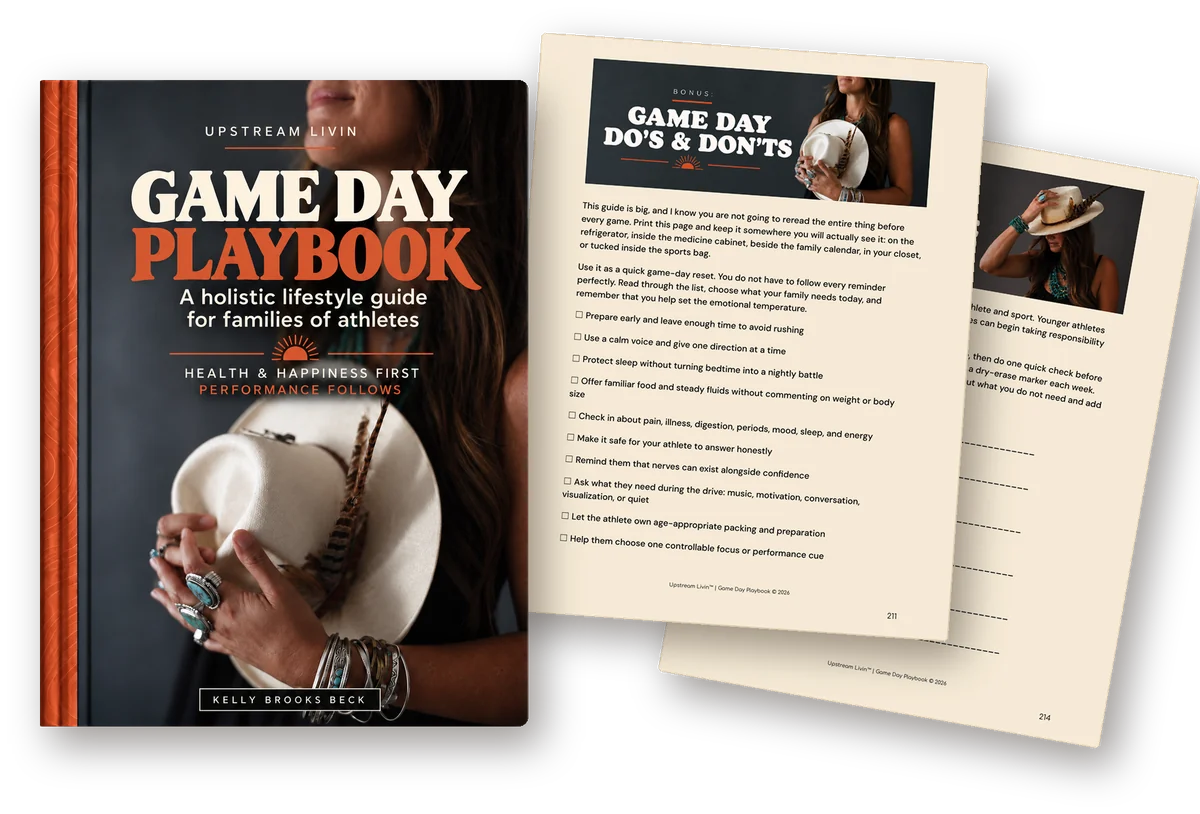
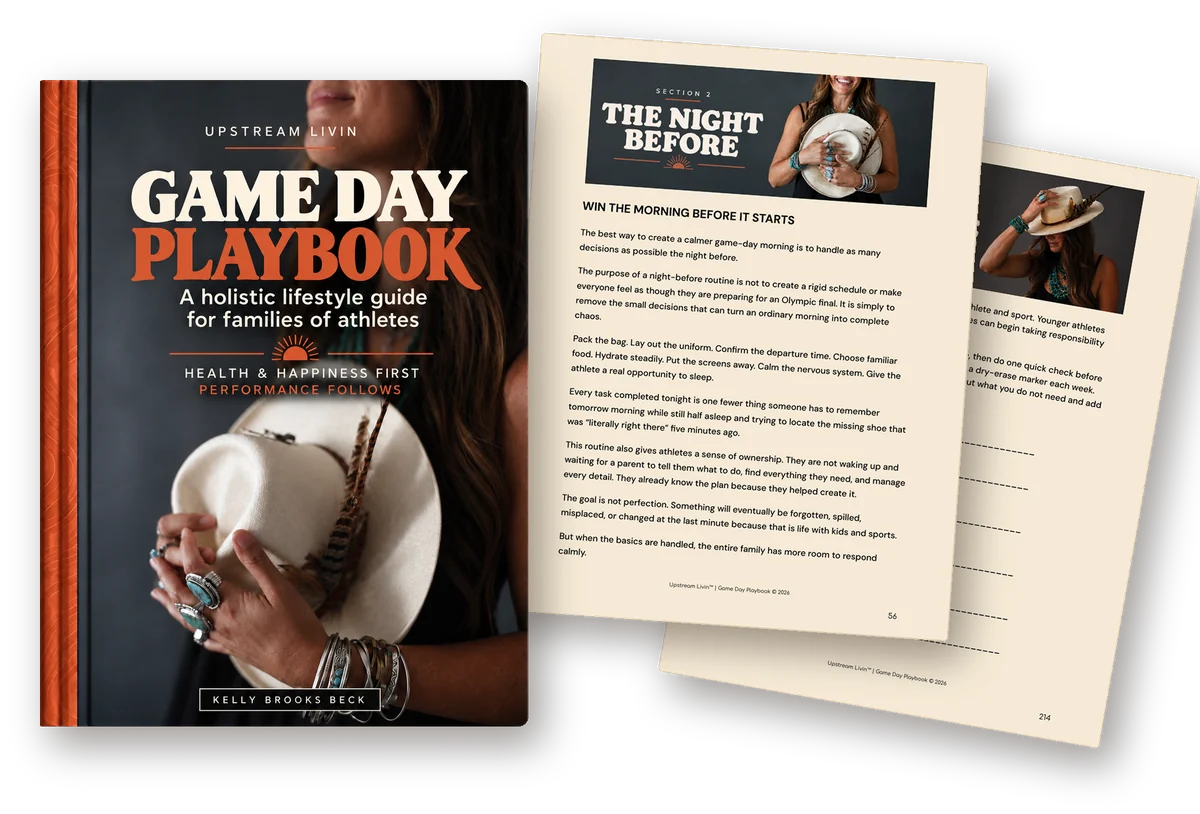
The Game Day Playbook cover with two inside pages fanned out behind it
The bigger picture

Preparation starts long before game day.

Your athlete does not leave the rest of their life in the parking lot. They bring the whole week with them.

Packed in their bag this week

  • Late practices
  • Homework
  • Meals eaten in the car
  • The missed water bottle
  • Screen time & doomscrolling
  • Friendship drama
  • Nerves
  • The sore shoulder they forgot to mention
  • Three late nights, then “catching up” the night before the tournament
  • Afraid to tell you about health symptoms due to fear of missing playing time

Game day is where invisible patterns suddenly become visible.

UpstreamPoor sleep
Shows up downstream as

Slow reaction time, irritability, or trouble moving on from mistakes.

UpstreamUnderfueling
Shows up downstream as

Low energy, poor focus, or hitting a wall halfway through the day.

UpstreamStress
Shows up downstream as

Stomach pain, racing thoughts, freezing, rushing, or suddenly not wanting to play.

Not every "off day" needs an emergency family meeting. Sometimes the ball simply refuses to cooperate because apparently it has personal beef with your child. But noticing patterns gives your family a place to begin.

What biohacking means to Kelly

Small, intentional adjustments. One at a time.

It is not

  • Turning your child into a tiny science experiment
  • Copying an adult influencer’s 47-step morning routine
  • Making an eight-year-old cold plunge at 5:00 a.m.

It is

  • Learning how food, hydration, sleep, light, breathing, mindset, movement, recovery, relationships, and environment affect how the body and mind feel and function
  • Then making small, intentional adjustments that fit your real family

Health and happiness come first.Performance follows.

Their statistics will change. Their playing time will change. One day the uniform comes off for the last time. The relationship you are building with your child, and the one they are building with their own body, travels with them for life.

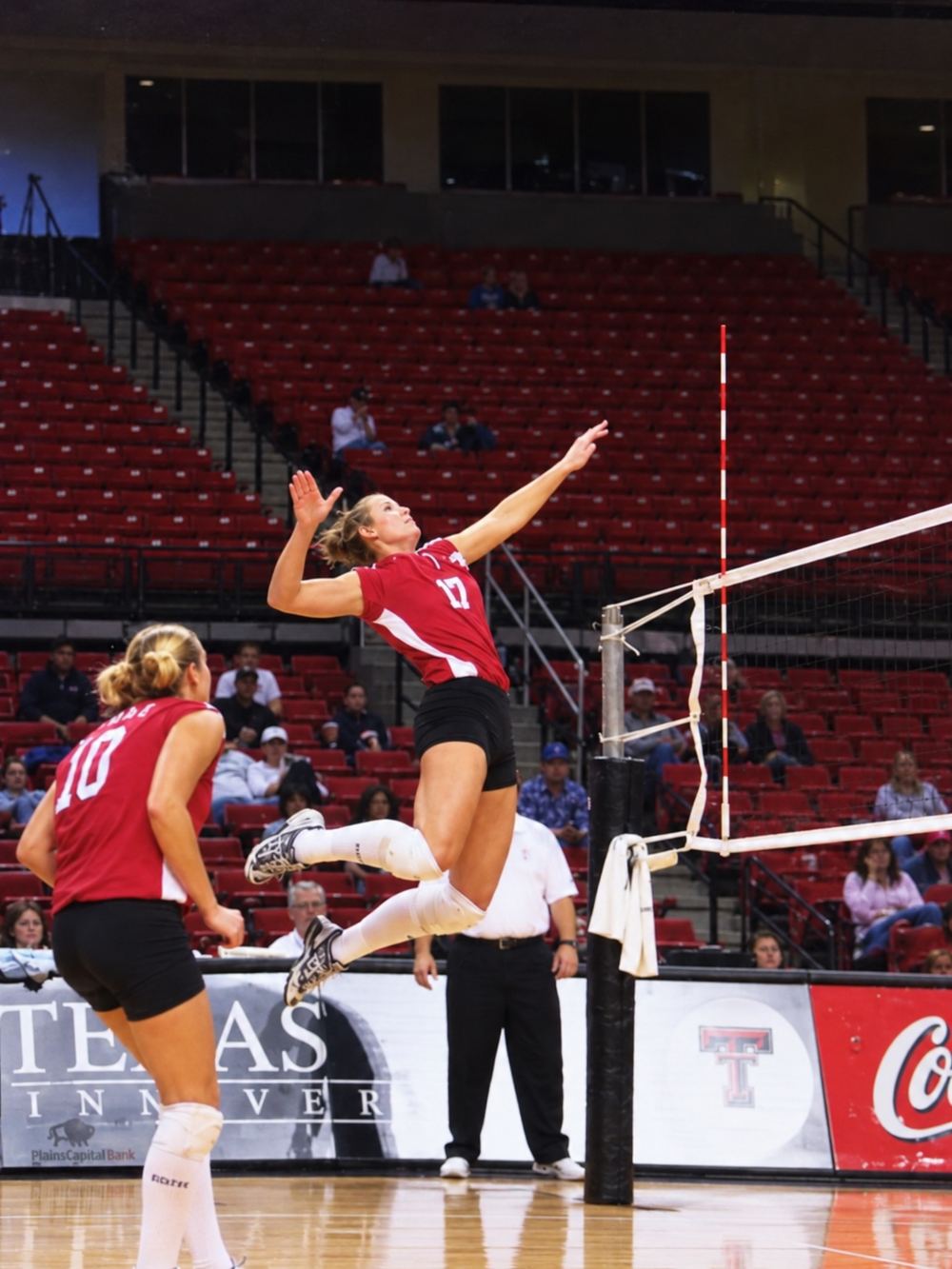
Kelly playing Division I volleyball at Texas Tech
Kelly on the court
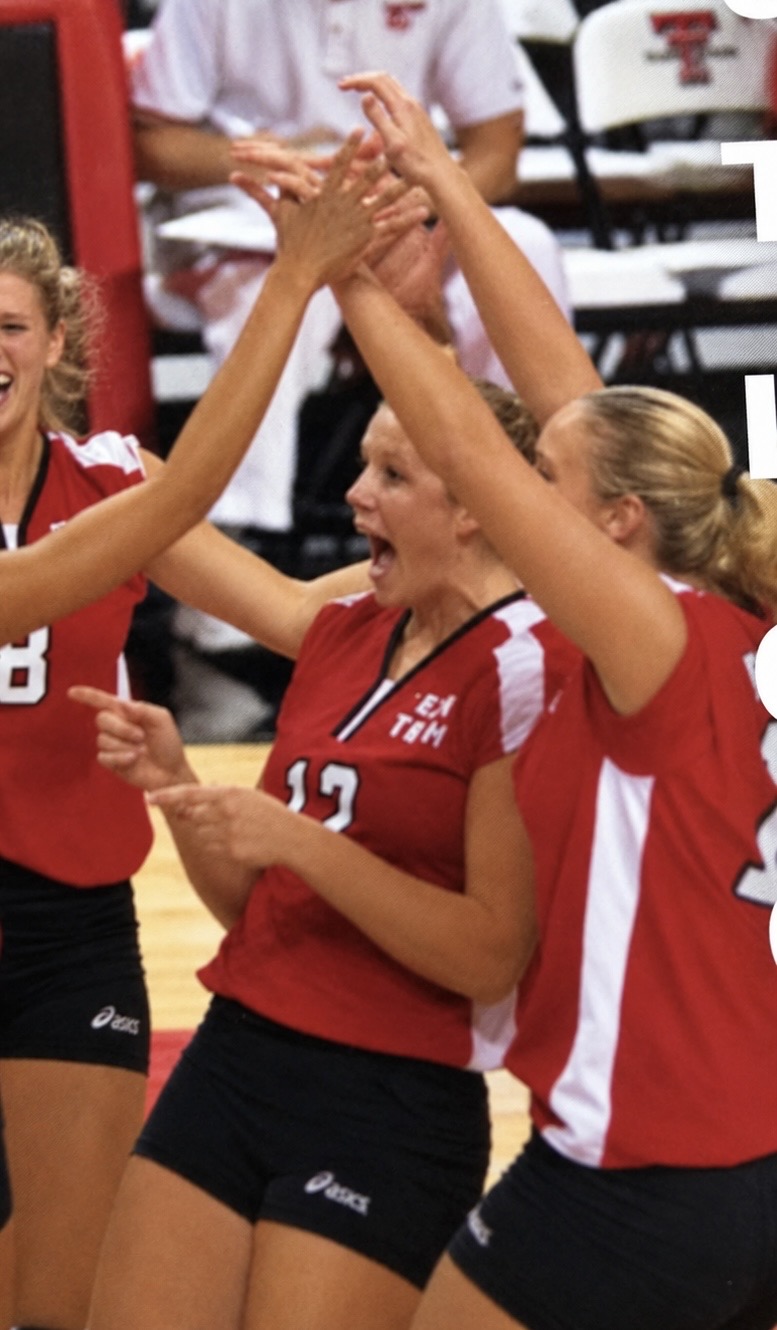
Kelly celebrating with Texas Tech teammates
Kelly at Texas Tech
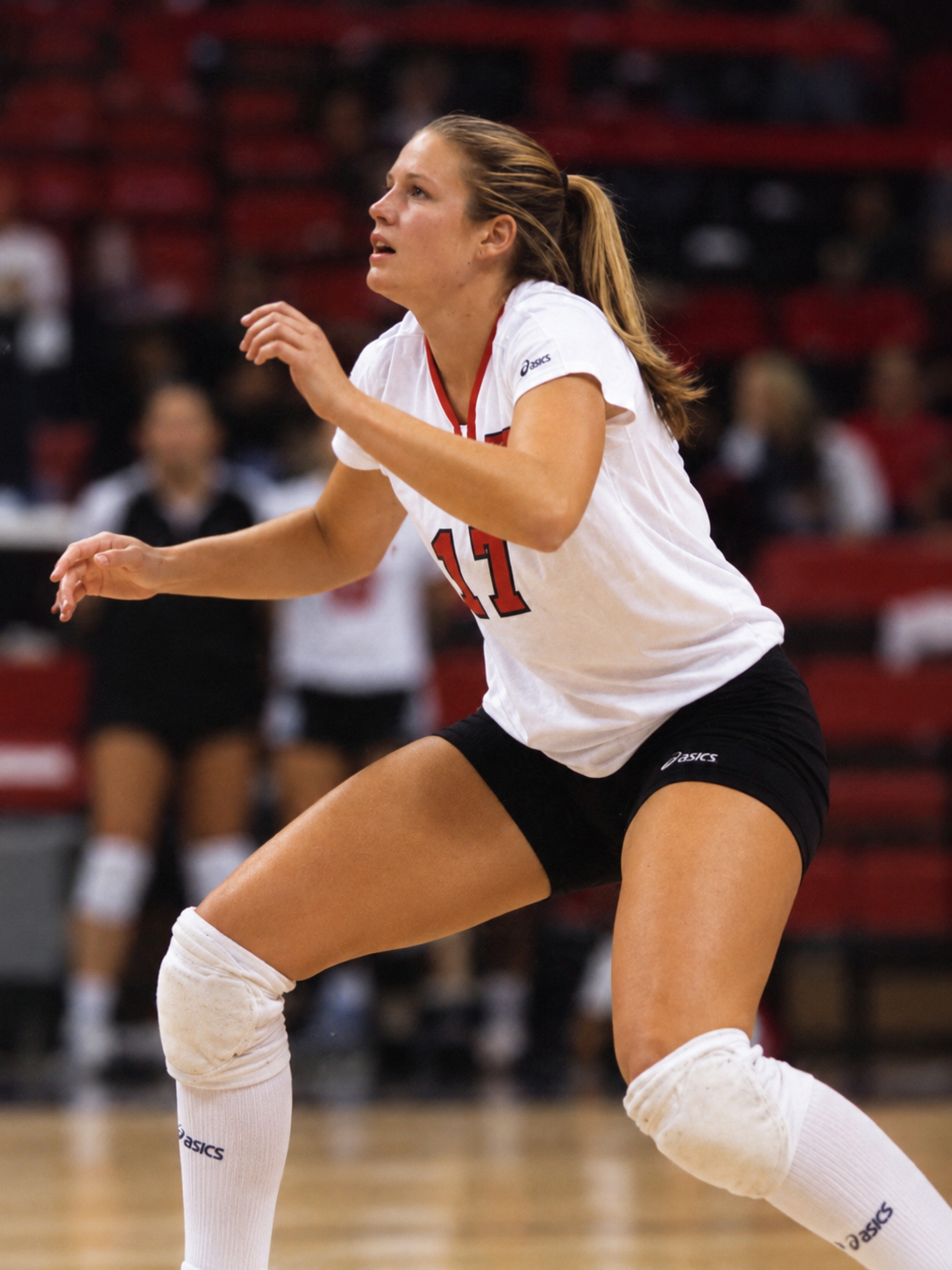
Kelly in ready position on the court at Texas Tech
Kelly at Texas Tech
Kelly at Texas Tech, Division I Big 12 volleyball

— THE upstream livin story

Why I started looking upstream

Hi, I’m Kelly Brooks Beck. Before I was a sports mom, coach, yoga teacher, studio owner, health coach, and biohacking educator, I was the kid who absolutely loved to compete.

1

The Athlete

Volleyball took me to Division I Big 12 at Texas Tech, then overseas to play professionally. I learned how to train hard, compete under pressure, work through adversity, and keep going when my body was tired.

What I did not learn was how to listen when my body was asking for help.

2

The whispers

“I did not realize it was possible to have a six-pack and an autoimmune disease at the same time. Surprise! Your abs do not receive your lab results.”

From the outside, I looked incredibly healthy. I was strong, fit, and competing at an elite level. I became the healthiest unhealthy person I knew. My body whispered for years while we treated whatever symptom was screaming loudest. I was sick constantly. Eventually, those whispers became screams.

3

The questions

My own health journey forced me to begin asking different questions. I went down wormhole after wormhole learning about integrative and functional health, nutrition, environmental health, hormones, sleep, light, stress, nervous-system regulation, immune function, recovery, and root-cause approaches.

These were entire worlds I did not even know existed—and I had worked in health and wellness for most of my adult life.

Now I hold degrees in Exercise and Sports Science and Human Development and Family Studies, and I am a 200-hour Registered Trauma Informed Yoga Teacher, Health Coach, Breath Work Facilitator, Biohacking Educator, former Division I and Professional athlete, Volleyball Coach, and now a sports mom to 2 highly competitive kiddos.

4

The playbook

This playbook was born at the intersection of it all:

  • The athlete I was.

  • The health struggles I survived.

  • The coach I became.

  • The mother I am now.

  • The parents who kept asking me for advice.

I want our athletes to develop body awareness before their whispers become screams, and to pursue excellence without believing that excellence requires ignoring pain, hiding symptoms, fearing food, or tying their worth to a scoreboard.

the heart of upstream livin

Pay attention earlier.

Catch the whispers before they become screams.

Ask better questions.

Look upstream for what is really going on.

Build strong foundations.

Sleep, food, hydration, recovery, connection.

Hand over the tools.

Skills athletes can eventually use for themselves.

Tiny brooks make GREAT rivers.

One small change may not look impressive today. Then another builds on it. And another. Before long, those little choices flow together and shape how your athlete sleeps, eats, hydrates, recovers, thinks, prepares, and cares for their body.

  • No overnight overhaul.You do not have to change everything by Monday.
  • No perfection.No obsessing. No chasing the ideal routine.
  • Just the next small choice.In a healthier, happier direction.
SLEEPWATERFOODBREATHREST
You just gotta keep livin, man. L-I-V-I-N!As Matthew McConaughey would say. Around here, we are learning how to keep upstream livin.
The Upstream Livin Game Day Playbook with printable pages
240+pages
Meet the playbook

The Upstream Livin Game Day Playbook

Help your athlete get upstream—putting health & happiness first so they feel strong, fueled, focused, confident, and supported before, during, and after competition—because when they feel their best, performance follows.

240+ pages, organized into 8 stages, so you can jump straight to what your family needs this week.

This is not just a packing checklist or another list of “five foods your athlete should eat before a game.” This is a lifestyle playbook showing how sleep, food, hydration, mindset, breathing, nervous-system regulation, communication, preparation, and recovery work together.

  • Real-life stories
  • What to say
  • Meal + snack ideas
  • Stage checklists
  • Reflection questions
  • Printable tools
Get the Game Day Playbook

8-stage digital playbookPrintable tools240+ page resource

The surprisingly hard moments it walks you through

  • Pregame nerves
  • Screens before competition
  • Questions about playing time
  • Coaching feedback
  • Mistakes that become emotional spirals
  • Disappointment on the bench
  • Sideline behavior
  • What to say after a hard game
  • When to talk, and when to let the car ride stay quiet
  • Noticing symptoms without panicking or ignoring them

Keep it handy all season. A long tournament weekend, an early game, a difficult loss, a recurring symptom, or an athlete ready for more independence may each send you back to a different section. It grows with your athlete.

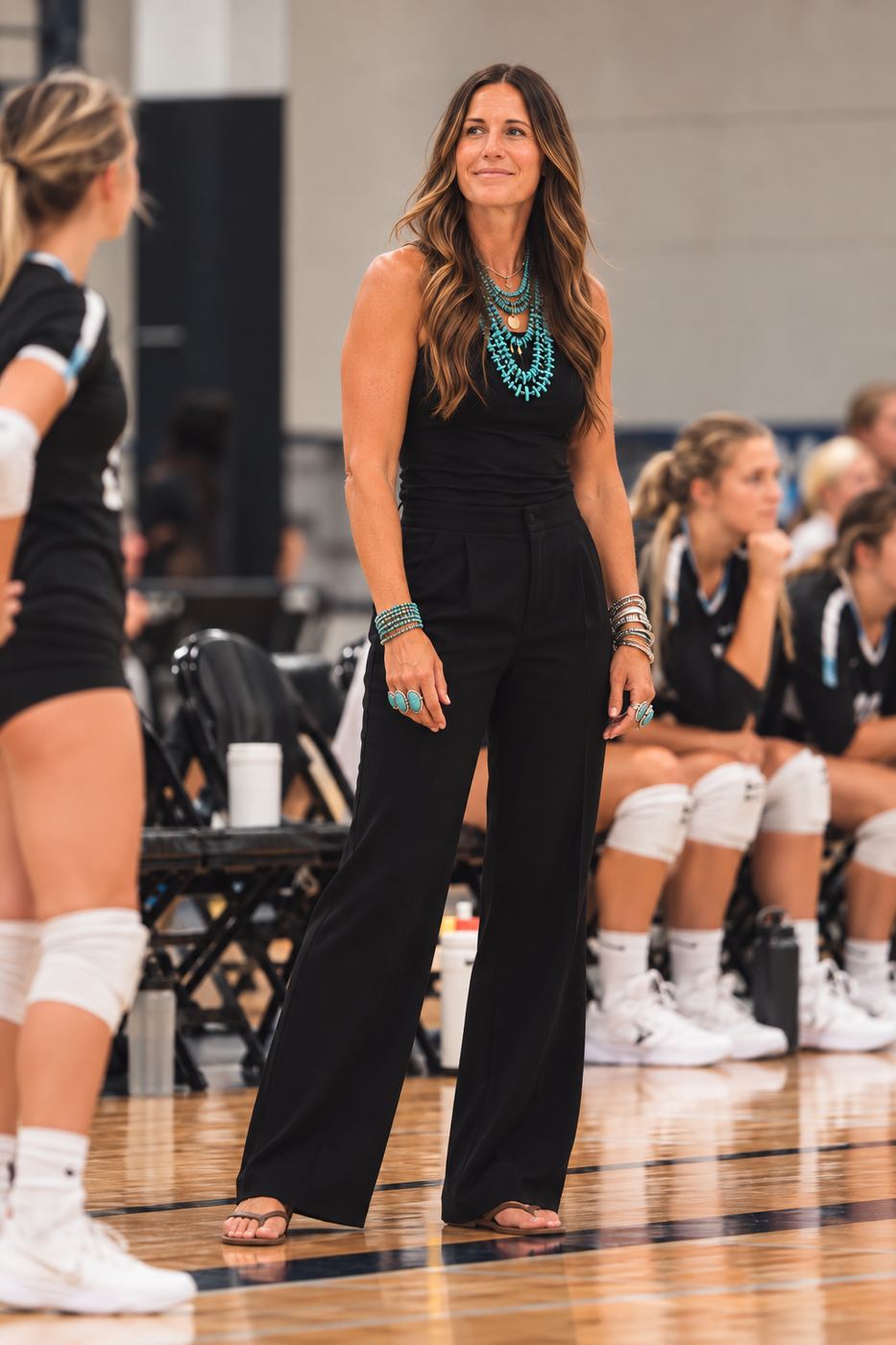
Kelly Brooks Beck, head down in a quiet moment
Kelly's photo

Health and happiness first.
Performance follows.

Kelly Brooks Beck Founder, Upstream Livin

Inside the playbook

Eight stages of preparation, competition, and recovery

Move through the whole game-day experience, or go straight to the section your family needs right now.

BeforeStages 1–3
  1. 1

    The Week Before

    Preparation begins days before the game.

    Look at sleep, food, hydration, school, training, responsibilities, and the family calendar together. Help your athlete ask questions early, see that playing time is often earned in practice, and own what they can control.

    Kelly’s take

    Notice the little health whispers during the week, before they become full-blown screams on game day.

  2. 2

    The Night Before

    Win the morning before it begins.

    Bedtime routines, screens and doomscrolling, morning light and dim evenings, room temperature, darkness, breathing, visualization, food, fluids, and getting everything ready before bed.

    Kelly’s take

    A routine that tells their brain and body: “We are prepared. We are safe. We can rest now.”

  3. 3

    Game Day Morning

    Start calm and stay ready.

    Enough time to wake up, morning light, a body check-in, familiar food, hydrating without flooding the stomach, and simple movement. Plus how parents set the emotional temperature of the morning.

    Kelly’s take

    Nothing says “calm nervous system” like someone screaming “WE ARE GOING TO BE LATE!” while looking for a missing sock.

Game dayStages 4–6
  1. 4

    Game Day Mindset

    Pressure is information.

    Understand nerves, identify controllables, choose a useful performance cue, use honest confidence statements, rehearse the game mentally, build a mistake plan, and use the drive intentionally.

    Kelly’s take

    Not every athlete wants a TED Talk from the driver’s seat.

  2. 5

    The Pregame Lock-In

    Shift from preparing to competing.

    Arriving with enough time, phone away, a purposeful warm-up, connecting with teammates, a repeatable performance routine, and being fully present for their first job. Plus when parents should observe, check in later, or trust the coaches.

    Kelly’s take

    Sometimes the most helpful thing you can do is let your athlete lock in.

  3. 6

    During the Game

    Stay steady when the game changes.

    Mistakes, coaching feedback, lineup changes, frustrating calls, body language, coachability, the next play, and staying engaged from the bench. Athletes learn the “So what? Now what?” mentality and how to become a goldfish after mistakes.

    Kelly’s take

    Your athlete already has a coach. Your job is to cheer.

AfterStages 7–8
  1. 7

    After the Game

    Connection before correction.

    What to say after a win, a loss, or a disappointing performance. Protect the car ride, let emotions settle, rehydrate and refuel, check for pain or injury, and why right after the game is rarely the time to question the lineup or confront a coach.

    Kelly’s take

    Murky water only clears when left alone.

  2. 8

    The Next Day

    Complete the recovery loop.

    Check soreness, energy, mood, hydration, and sleep. Easy movement, intentional rest, family walks, recovery meals, and reflection without rumination. Your athlete names what went well, what felt hard, and one focus for the next practice.

    Kelly’s take

    Review film without turning it into a two-hour documentary about everything your child did wrong.

Get the Game Day Playbook

8-stage digital playbookPrintable tools240+ page resource

Printable tools included

Tools that put the guidance into practice

Print them, customize them, and put them where your family will actually see them.

Game Day ChecklistUniformWater bottleMouthguardExtra socks + slidesRecovery tools

Game Day Printable Checklist

Your athlete packs their own uniform, equipment, food, fluids, recovery tools, backup clothing, extra socks, slides, and personal items.

Let the checklist be the bad guy reminding them about their mouthguard, for once.

Meal + Snack Builder
BeforeBetween
Familiar breakfastEasy snackRecovery mealProtein shake

Game Day Meal and Snack Builder

Simple ideas for the night before, breakfast, lunch, before competition, between games, and afterward. Your athlete checks the foods they would actually try.

The “perfect” tournament snack does not help if your child refuses to eat it.

Parent Do’s & Don’ts
DoDon’t

Parent Game Day Do’s & Don’ts

A quick reminder for the fridge, closet, or medicine cabinet: what your athlete needs from you in the stands, after mistakes, around officials, and on the drive home.

My Reflection
What went wellWhat felt hardOne focus for next time

Athlete Reflection Page

A private place to process the game, their response to mistakes, and what to work on next. It is not extra homework, and they never have to turn it in to you.

Symptom ConversationEnergySleepPainMoodQuestions to ask

Athlete Symptom Conversation Guide

Notice patterns and create a safe space to talk about pain, digestion, fatigue, sleep, menstrual health, eating, mood, or anxiety. Organize it all for a more useful conversation with a qualified healthcare professional.

What changes for your family

Know what to plan for, and how to respond when the plan goes sideways.

A clearer picture of the week

See sleep, meals, hydration, travel, school, training, and recovery together, before the chaos starts.

Words for the hard moments

Conversation examples for nerves, frustration, disappointment, injury, playing time, and when they are finally ready to talk.

An athlete who takes ownership

The goal is teaching them to pack the bag themselves, preferably before everyone is sitting in the car.

What actually supports performance

How food, hydration, sleep, breathing, mindset, light, movement, and recovery work together for the whole athlete.

Clarity about your role

Know when they need encouragement, a question, a boundary, professional support, or room to work it out.

A protected relationship

Love, approval, and peace at home never depend on performance. Sports end one day. Your relationship should not end when their sports career is over.

Whispers noticed sooner

Changes in energy, mood, pain, digestion, sleep, eating, menstrual health, and enjoyment, without fear or self-diagnosis.

Skills that outlast the season

Preparation, self-awareness, resilience, communication, responsibility, teamwork, and asking for help.

From families Kelly has worked with

Calmer mornings. Steadier athletes. Lighter car rides.

“Game days finally stopped feeling like complete chaos.”

Our mornings feel calmer now, and my daughter has a routine she trusts.

Read Amanda’s full story

Before working with Kelly, our biggest challenge was the anxiety that seemed to take over our entire house before tournaments. My daughter would stay up late, barely eat breakfast, complain that her stomach hurt, and then become frustrated before we even reached the field. I thought I was helping by giving her constant reminders and encouragement, but I was actually adding more noise.

Kelly helped us look at the whole week instead of trying to fix everything on game-day morning. We worked on sleep, familiar meals, hydration, packing the night before, breathing, and giving my daughter more ownership of her routine. The Playbook also helped me understand when to encourage her and when to stop talking—which may have been the hardest lesson for me! Ha!

Our mornings feel calmer now, and my daughter has a routine she trusts. She still gets nervous because she cares, but she knows what to do with those nerves. Most importantly, we are no longer starting every tournament already stressed and arguing with each other.

AAmanda R.Mother of a 13-year-old soccer player

“I thought my job was to coach him from the sidelines. I was wrong.”

He has become more composed after mistakes and more willing to communicate directly with his coaches.

Read Jason’s full story

My son was struggling to recover after mistakes. If he missed an assignment or received a correction from his coach, I could see it all over his body language. I would try to help by yelling instructions from the stands and then breaking down everything in the car afterward. I had good intentions, but our conversations usually ended with both of us frustrated.

Working with Kelly helped me see that my son already had coaches. What he needed from me was a steady parent. We used the Playbook to create a simple mistake-reset routine, talk about controllables, and change the way we handled the ride home. I also learned to ask whether he wanted me to listen, help him problem-solve, or simply drive.

He has become more composed after mistakes and more willing to communicate directly with his coaches. Our relationship feels lighter because every game no longer turns into a performance review. I still cheer loudly—but I leave the coaching to the coaches now.

JJason M.Father of a 15-year-old football player

“I learned that taking care of my body is part of being a serious athlete.”

Caring for my health is not separate from performance—it is the foundation of it.

Read Maya’s full story

I used to think being tough meant ignoring everything. I played tired, skipped meals when I was busy, stayed up scrolling, and did not tell anyone when my shoulder or stomach bothered me because I was afraid of losing playing time.

Kelly never made me feel weak or dramatic. She helped me notice patterns in my sleep, food, hydration, stress, recovery, and menstrual cycle. We also worked on visualization, breathing, positive self-talk, and a reset routine I could use after making an error.

I feel much more prepared now because I understand what my body needs before, during, and after competition. I have also become more confident speaking with my parents and coaches when something does not feel right. Caring for my health is not separate from performance—it is the foundation of it.

MMaya T.16-year-old volleyball athlete
Putting it into practice

Build a routine that works for your athlete and your actual family.

You do not need to hand your athlete a 240+ page playbook on Monday and announce that the whole family is changing by Friday. Please do not do that. Ha!

  1. Step 1

    Read it yourself first

    Get the full picture before you change anything at home.

  2. Step 2

    Ask three questions

    • What is creating the most stress for our family right now?
    • Where does our athlete feel least prepared?
    • What one small change would make this week calmer?
  3. Step 3

    Pick one small change

    Start with one or two swaps, like the ideas below, and build from there.

  4. Step 4

    Invite your athlete in

    • What would they like help with?
    • What do they want to improve?
    • What are they ready to manage themselves?
  • Pack the sports bag the night before
  • Charge phones outside the bedroom
  • Carry a water bottle through the school day
  • Practice one reset breath after mistakes
  • Add a more substantial breakfast before early games
  • Change how you talk on the car ride home

Game day is not the ideal time to introduce 5 new foods, a new sleep routine, or an unfamiliar mental-performance plan. Use these tools on school days, practice days, and ordinary weekends leading up to the BIG GAME! Again, this is a lifestyle guide, meant to help the ENTIRE family, and not just the “athlete” of the house.

  1. Practice creates familiarity.
  2. Familiarity creates confidence.
  3. Tiny changes build on one another.
  4. That is upstream livin.
Kelly coaching volleyball
Kelly coaching
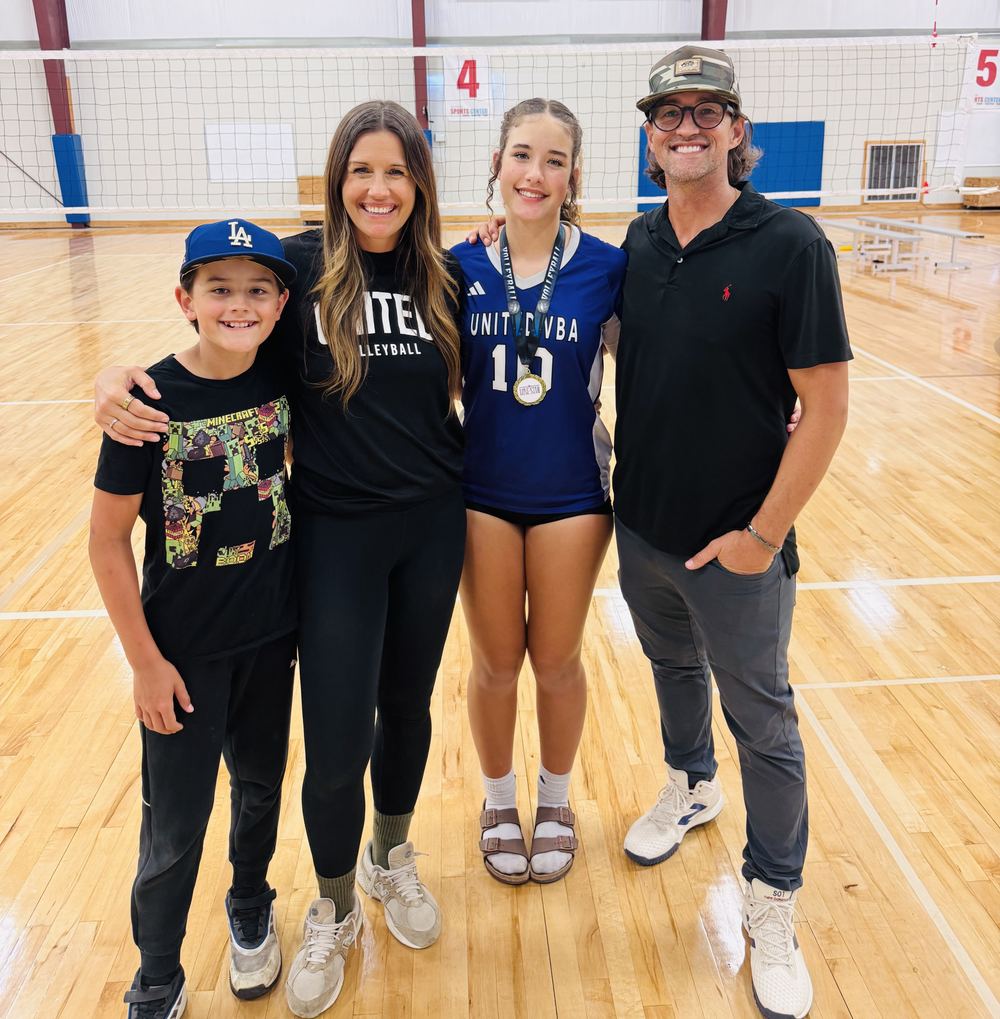
Kelly with her family after a tournament
Kelly's family

— A note from kelly

I have spent more than 25 years developing athletes on and off the court.

  • Division I Big 12 Volleyball at Texas Tech University

  • Professional volleyball in Puerto Rico, Germany, and Italy

  • Coaching across Youth, Club, High School, Collegiate, USA Volleyball, and National Club settings and Camps

  • Degrees in Exercise and Sports Science and Human Development and Family Studies

  • 200-hour Registered Yoga Teacher + Trauma Informed Teacher Training

  • Health coaching, breathwork facilitator, nervous-system regulation, and bio-hacking education

  • Raising two young competitive athletes with her husband, a former European Professional Baseball Player and Coach, now a select Baseball Head Coach and Organization Owner.

In other words, I've worn nearly every hat in sports: athlete, coach, sports mom, the "Where is your other shoe?" parent, and the one who packed snacks for twelve hours only to watch them disappear before the first game.

I care deeply about how athletes perform. But I care even more about whether they are healthy, happy, supported, enjoying their sport, and learning to trust and speak up for themselves.

Sometimes helping them means saying less. Not every quiet car ride needs to become a podcast episode featuring your full technical analysis of the game. Sometimes your athlete needs food, silence, and a parent who is simply glad to see them.

This is the guide I wish every athlete, coach, and sports parent had from the beginning. Now I get to share it with you.

Kelly Brooks Beck

Founder + Coach, Upstream Livin

Everything you get

Get the Upstream Livin Game Day Playbook

From planning a packed week to knowing what to say after a difficult game: one complete resource to help your athlete prepare, compete, recover, and grow.

Inside, you will receive

  • The complete 240+ page Game Day PlaybookOrganized into 8 stages, from the week before competition through recovery and reflection the next day, so you can jump straight to what your family needs this week.
  • Practical guidance for the habits around performanceSleep, food, hydration, breathing, mindset, screens, preparation, nervous-system regulation, and recovery, built for school, late practices, travel, and tournament weekends.
  • Real-life conversation examplesWords for nerves, mistakes, coaching feedback, playing-time frustration, disappointment, recurring symptoms, and the drive home.
  • 5 printable toolsReady to print, customize, and stick on the fridge.
    • Game Day Packing Checklist
    • Meal and Snack Builder
    • Parent Game Day Do’s & Don’ts
    • Athlete Reflection Journal Page
    • Athlete Symptom Conversation Guide
Yours to keep

Use it all season, and every season after

  • Instant download, straight to your email
  • Read it on your phone, tablet, or computer
  • Print the tools as often as you need
  • Jump straight to the stage your family needs this week
  • Come back to it as your athlete grows
  • Habits the whole family can grow into together

Because the questions do not stop once the season starts, and raising an athlete gives us plenty of them.

Your investment Game Day Playbook cover
$123USD

240+ page playbook + 5 printable tools

Sales tax will be calculated and added at checkout where applicable.

Get the Game Day Playbook
  • Immediate digital access sent to your email
  • Secure checkout below
  • All sales are final. No refunds except as required by law. This is an instantly downloadable digital product. Tech trouble? [email protected]

Complete your order below

Enter your details to get instant access to the playbook and printable tools.

You’re gettingThe Game Day Playbook240+ pages · 5 printables · instant download
$123USD · one time
EmailWhere should we send it?
Purchase detailsThe final step
your address

I agree to the terms and conditions and acknowledge the Privacy Policy. I understand this is a digital product for personal and household use, and that all sales are final. No refunds except as required by law.

  • Secure checkout
  • Instant access by email
  • All sales final, except as required by law

Sales tax will be calculated and added at checkout where applicable.

Terms & Conditions · Privacy Policy

— questions

Frequently asked questions

Everything families usually ask before they grab the playbook.

still wondering?

Email us. We are here to help.

Is this only useful on game day?

No! The Game Day Playbook is a lifestyle guide you can use all season and beyond. It walks you through preparation, competition, and recovery while helping you build everyday habits around sleep, food, hydration, mindset, screen time, and communication.

My goal is to support your whole family holistically. The changes you make to support your athlete can also make a meaningful difference in your entire family’s health and happiness.

These are habits you can grow together and carry well beyond sports.

Is this for a particular sport or age?

No! For years, I’ve worked with athletes of all ages, from kids as young as six to professional athletes.

This playbook is for families with athletes in any sport, whether they’re just getting started in local rec leagues or competing at a high level.

You can adapt the questions, checklists, and habits to your athlete’s age, sport, and level of independence—so the guidance grows with them.

Is this only for highly competitive athletes?

No. Families in recreational leagues, school sports, club programs, select teams, and highly competitive environments can all still use it. The goal is helping young people prepare, care for themselves, enjoy their sport, build confidence, and develop skills for life.

Do we have to follow every step?

Absolutely not! This is meant to support your family, not give you one more thing to feel like you’re falling behind on. Choose the sections that feel most helpful and start with one or two small changes that work for your family.

Perfection is not the goal. Tiny changes add up over time, and you can build on them as you go.

“Tiny brooks make great rivers.” 🌊

What do you mean by "biohacking"?

Paying attention to the habits and environmental factors that affect how the body and mind function, then making thoughtful adjustments: food, hydration, sleep, light, screens, breathing, mindset, movement and recovery.

This Playbook does not encourage children to copy extreme adult protocols, complicated supplement routines, or unsafe internet trends. We begin with the foundations.

What if my athlete has an injury or symptom that concerns me?

The playbook is educational and does not replace assessment, diagnosis, treatment, or individualized advice from a qualified healthcare professional. The symptom conversation guide helps you notice patterns, organize what you see, and prepare questions.

Persistent or concerning symptoms, pain, injury, significant mood changes, or concerns about eating should be discussed with an appropriately qualified professional.

Does the playbook guarantee better performance?

No ethical coach or educator can guarantee a specific athletic outcome. Performance depends on development, health, training, coaching, competition, opportunity, and more, and everyone still has to do the work.

The playbook helps families build habits and environments that support the whole athlete. Health and happiness come first. Performance is the byproduct, not the promise.

Game Day Playbook · $123 USD8 stages + printables + 240+ pages
Get the Playbook

Questions? [email protected]  ·  © 2026 Upstream Livin. All rights reserved.

Terms & Conditions · Privacy Policy

Disclaimer

The information, strategies, stories, and results shared by Upstream Livin and within the Upstream Livin Game Day Playbook are provided for educational and informational purposes only. They are not guarantees of individual results. Every athlete is different. Outcomes may vary based on age, development, health history, training, coaching, environment, nutrition, sleep, recovery, consistency, effort, access to care, and many other individual factors.

The Upstream Livin Game Day Playbook provides practical education, tools, strategies, and lifestyle practices designed to help parents better support their young athletes before, during, and after competition. No specific athletic, health, performance, recovery, academic, emotional, financial, recruiting, scholarship, or other outcome is promised or guaranteed.

The information provided by Upstream Livin is not medical advice. It is not intended to diagnose, treat, cure, or prevent any disease, injury, mental-health condition, or other health condition, and it is not a substitute for individualized care from an appropriately qualified healthcare professional.

Children and adolescents have unique health and developmental needs. Parents and caregivers should use their own judgment and consult qualified healthcare professionals when they have questions or concerns regarding an athlete's health, symptoms, medications, supplements, nutrition, eating behaviors, injuries, mental health, development, or ability to participate safely in sports.

Any examples, personal experiences, testimonials, or success stories shared by Upstream Livin represent individual experiences and should not be interpreted as typical or guaranteed results.

By purchasing, accessing, or using the Upstream Livin Game Day Playbook, community, workshops, videos, resources, or other educational materials, you agree to conduct your own due diligence and accept responsibility for the decisions you make and the manner in which you choose to use the information provided.

Upstream Livin, its owner, contributors, coaches, and affiliated professionals are not responsible for individual outcomes or for actions taken or not taken based on the educational information provided through its products, programs, community, or services. Results depend upon factors unique to each athlete and family. No specific result is guaranteed.

Game Day Playbook · $123 USD8 stages + printables + 160+ pages
Get the Playbook